
A practical guide to internal and external sand & cement rendering, silicone render, substrate preparation, moisture, cracking, finishes and choosing the right system.
Rendering services: the two main systems we cover
For most London homes we discuss two main approaches: traditional sand and cement render and modern silicone render systems. Sand and cement can be used internally or externally when it suits the background and specification. Silicone render is primarily an external façade finish and is normally installed as part of a compatible proprietary system.
The right choice starts with the wall, not the colour chart. Existing coatings, suction, cracks, movement, moisture, salts, exposure and previous repairs can all affect what preparation and render system are appropriate.
Internal sand and cement rendering
Sand and cement render is still useful inside buildings where masonry or blockwork needs a robust, level background before the final decorative finish. It can straighten irregular walls, fill deeper variations that are unsuitable for a thin skim alone, and provide a firm backing for a compatible finishing coat.
Where internal rendering can make sense
- Uneven brick or block walls that need more correction than a skim coat can provide.
- Areas where defective existing material has been removed back to sound masonry.
- Renovation work where a durable rendered background is specified before the final plaster finish.
- Local repairs where the replacement build-up needs to match the surrounding wall.
Preparation is critical. Dust, weak material, contamination and unsuitable coatings need dealing with first, and very high or low suction backgrounds may require specific preparation. We do not treat sand and cement render as a cure for unexplained damp. If a wall is wet, salt-contaminated or repeatedly failing, the moisture source should be investigated before simply covering it again.
For regulatory context, GOV.UK Approved Document C covers resistance to moisture in internal and external walls. It is useful background when moisture, ground levels or damp-proofing details are relevant to the work.
External sand and cement rendering
Traditional sand and cement render remains a practical external finish on suitable masonry. A correctly specified multi-coat build-up can level the façade and provide a durable surface that is commonly decorated with an appropriate exterior masonry coating.
What a good external render job depends on
The visible finish is only the last part of the work. The existing wall must first be assessed for loose render, hollow areas, friable masonry, cracks, movement, contamination and moisture. Junctions around windows, doors, sills, copings, roof lines and the damp-proof course also matter because poor detailing can allow water to get behind an otherwise sound rendered face.
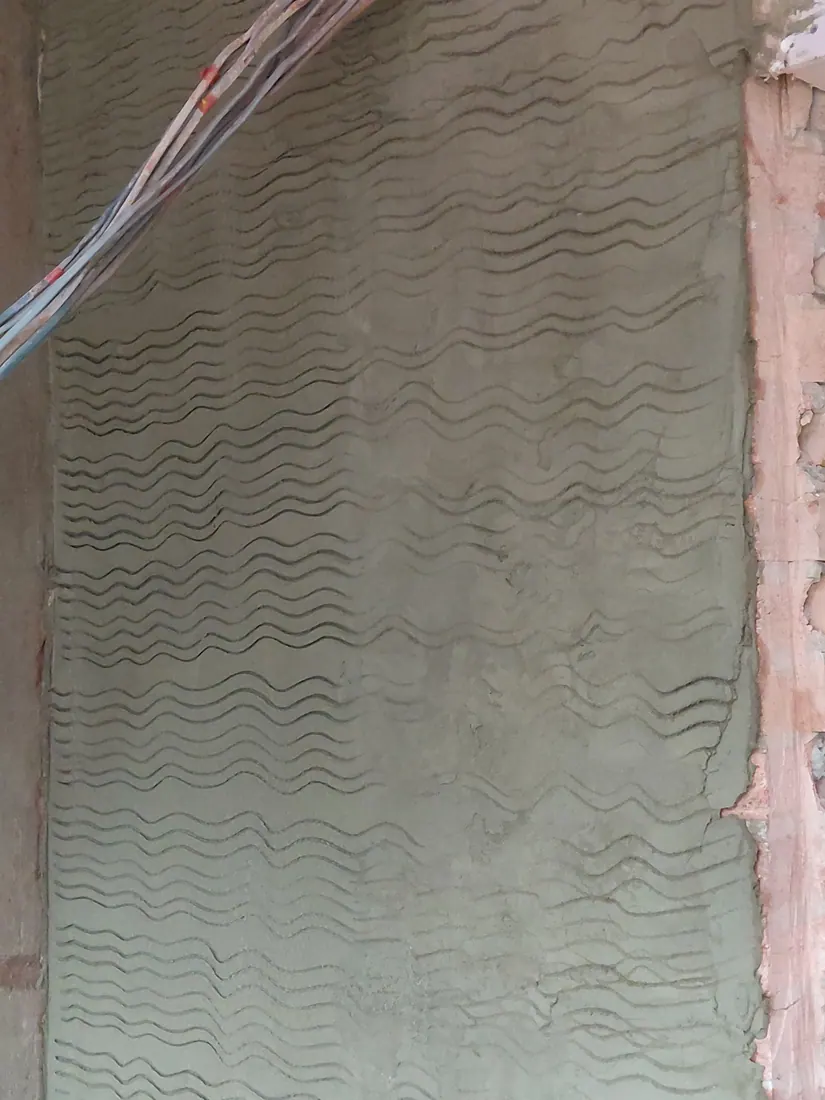
A traditional build-up may include a prepared background, an initial/base or scratch coat that provides a key, and a subsequent finishing coat. The exact materials, coat thicknesses, strength and preparation should suit the background and exposure; there is no single mix ratio that is correct for every London property.
Cracking, reinforcement and curing
Cement-based render is comparatively rigid. Cracking risk increases where backgrounds move, dissimilar materials meet, existing cracks are simply covered, coats are poorly proportioned, or fresh work dries too quickly. Mesh or other reinforcement can be useful in specified locations, but it is not a substitute for correcting an unstable substrate or movement problem.
Fresh external render also needs suitable weather and curing conditions. Strong sun, drying wind, heavy rain, frost and low temperatures can all affect application and early curing, so protection and scheduling form part of a proper exterior job.
Painting sand and cement render
Unlike most coloured silicone topcoats, traditional sand and cement render is commonly painted after it has cured and dried sufficiently for the selected coating. Future repainting is therefore part of the maintenance cycle and should be considered when comparing systems.
Silicone rendering for external walls
Silicone render is a modern external option, usually supplied as a thin, factory-produced textured topcoat used with compatible base coats, reinforcement mesh and primer. It offers a wide choice of colours and a finished façade that normally does not need painting immediately after installation.
One reason silicone systems are popular is their combination of low liquid-water absorption with water-vapour permeability. That does not make a rendered wall universally waterproof, and it does not solve defective gutters, leaking copings, rising moisture or cracks in the underlying structure.
Our complete silicone render guide goes into system build-up, substrates, mesh, colours, grain sizes, weather limits, maintenance, repairs and the situations where silicone render may not be the right choice. If you are specifically considering the K Rend brand, see our K Rend services and system guide.
Sand and cement vs silicone render
| Consideration | Sand & cement render | Silicone render |
|---|---|---|
| Typical use | Internal backgrounds and external masonry | External façades |
| Finish | Traditional cement-based rendered surface | Factory-produced textured coloured topcoat |
| Painting | External work is commonly painted | Usually through-coloured and normally does not need initial painting |
| Build-up | Specified traditional render coats | Compatible system of base coat, reinforcement, primer and topcoat |
| Movement | Relatively rigid; background and crack assessment are important | System reinforcement can improve resistance to minor stresses, but cannot cure structural movement |
| Maintenance | Inspect for cracks and expect periodic repainting where painted | Cleaning and local maintenance may be required; colour repairs can remain visible |
| Best reason to choose it | Traditional, robust solution where compatible with the wall and required finish | Modern coloured façade with low water absorption and good vapour permeability when correctly specified |
Neither system is automatically “better”. The appropriate choice depends on the substrate, building details, desired appearance, budget, exposure and maintenance expectations.
Moisture, DPCs and external-wall details
Rendering should not bridge or conceal details that are intended to manage moisture. Ground levels, damp-proof courses, sills, copings, roof abutments and drainage defects need to be considered before work starts. Government Approved Document C provides statutory guidance for England on resistance to moisture, including walls.
On more complex or higher-risk buildings, external-wall specifications can also involve fire-safety requirements beyond the decorative finish itself. GOV.UK Approved Document B explains the fire-safety framework for external walls in England. A product's individual fire classification should never be treated as proof that an entire wall build-up is suitable for every building.
What we check before recommending a render system
- Background: brick, block, existing render or another substrate, and whether it is sound enough to receive new work.
- Existing failures: hollow render, cracks, loose coatings, friable surfaces and previous patch repairs.
- Moisture: staining, leaking rainwater goods, high ground levels, defective details or other sources that should be addressed first.
- Movement and junctions: changes of material, openings and existing cracks that may need particular treatment.
- Finish: traditional painted render or a coloured textured system, plus the colour and texture required.
- Access and protection: scaffolding/access, neighbouring surfaces, windows, paving and weather protection.
This assessment is why a useful rendering quotation should describe more than a number of square metres. It should make clear what preparation is included and what complete system is proposed.
Read a rendering quotation line by line
Check whether the price includes removal of unsound material, substrate repairs, beads, reinforcement where specified, base coats, finishing coats, access/scaffolding, masking and protection, waste removal and treatment around openings. For silicone systems, the manufacturer/system and finish should be clear. For traditional work, the intended render build-up and final decoration should be understood.
Our rendering project gallery includes preparation details and examples of rendered finishes.
Rendering FAQs
Can sand and cement render be used indoors?
Yes. On a suitable internal masonry background it can provide a robust levelling coat before a compatible final plaster finish. The wall condition and any moisture problem should be assessed first.
Can sand and cement render be used outside?
Yes. It is a traditional external rendering method on suitable masonry, but preparation, coat specification, detailing, curing and eventual decoration all affect performance.
Is silicone render the same as K Rend?
No. Silicone render describes a type of modern render/topcoat technology. K Rend is a brand with a range of render products and systems, some of which use silicone technology.
Can you render over cracked or hollow existing render?
Not simply because a new finish will hide it. Loose or hollow material and the reason for significant cracking should be assessed first. Rendering over an unstable background risks transferring the problem to the new surface.
Which is better: sand and cement or silicone render?
Neither is universally better. Sand and cement is a traditional robust option for appropriate internal and external backgrounds; silicone systems offer a modern coloured external finish. The building, substrate, exposure, desired finish and maintenance expectations should decide the specification.
How do I request a rendering quote?
Send your postcode, wide photographs of each elevation or internal area, close-ups of cracks or damage, and tell us whether you are considering traditional sand and cement or a silicone finish. We can then advise on the next step and arrange a free, no-obligation quotation.
Explore rendering in more detail
Which rendering route fits the job?
Internal masonry
Sand and cement can provide a robust level background where the wall and moisture conditions are suitable.
Traditional exterior
Sand and cement remains a practical external system when correctly specified, cured and maintained.
Modern coloured exterior
A compatible silicone system can provide a textured, coloured finish without immediate painting.
Get a quote for your own surfaces
A useful enquiry includes wide photographs, close-ups, your postcode and the finish you have in mind. We can discuss the right next step and provide a free, no-obligation quotation.
Send a WhatsApp enquiry