
People often ask for “K Rend” as though it were one finish. In fact, the name covers several rendering systems, and they don’t all go onto a wall in the same way. Before settling on a colour or texture, it’s worth finding out what the existing surface will take.
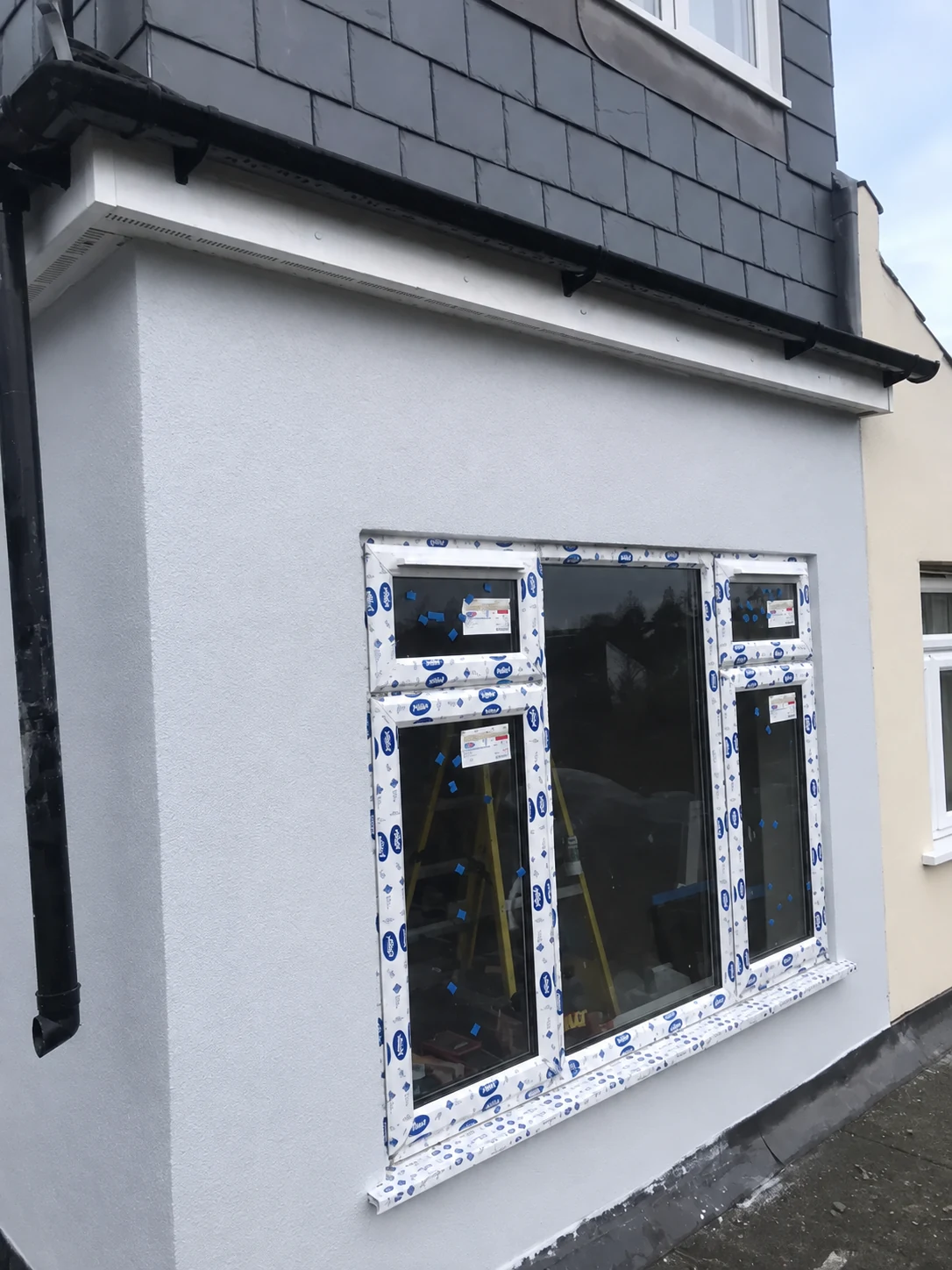
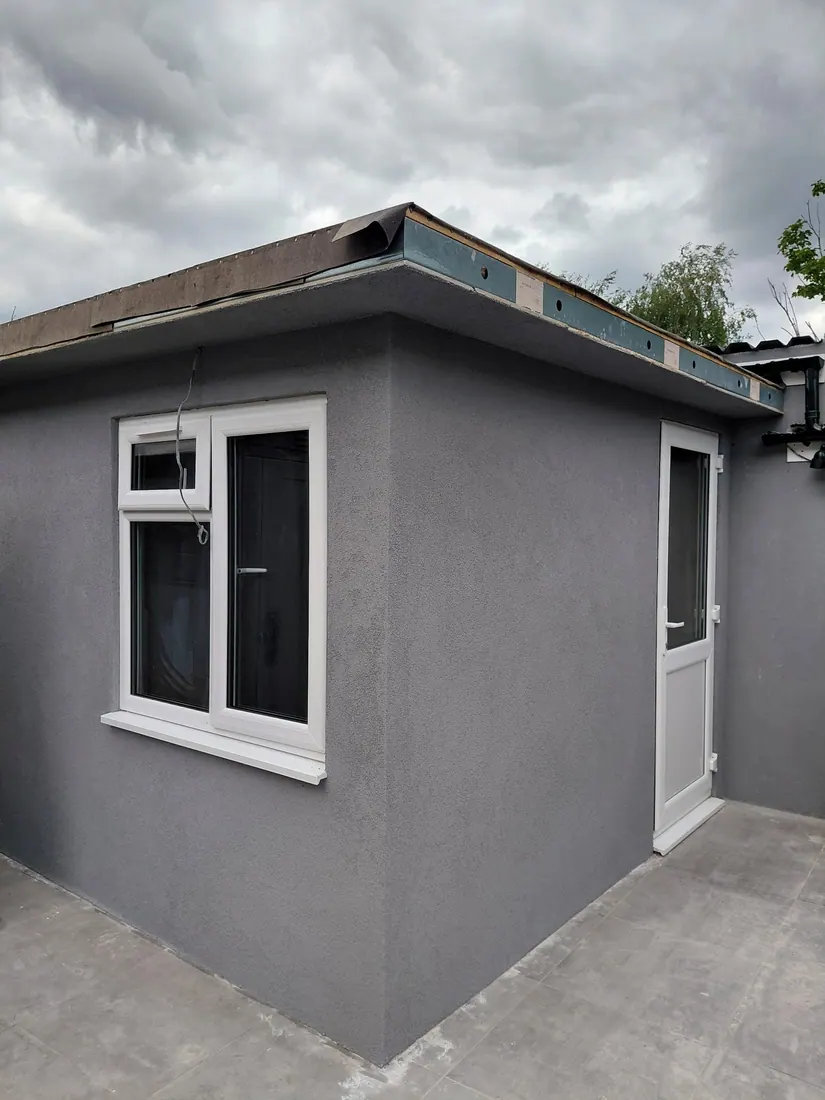
What is K Rend?
K Rend makes external renders in several finishes, from fine textured silicone coatings to scraped and roughcast styles. Each has its own preparation and application requirements, so the product that suits one house may not suit the next.
Silicone TC is a thin-coat finish used with a suitable base coat and primer. Silicone K1 and Silicone FT are different types of render with their own application requirements. They’re not interchangeable, even if the finished colours look similar.
If you’re comparing brands or trying to understand how thin-coat systems work, our complete silicone render guide goes into more detail. complete silicone render guide
K Rend finishes: thin coat, scraped texture and other options
Silicone TC thin-coat render
Silicone TC comes ready mixed and is available in different grain sizes. It needs a properly prepared base and K Rend’s Primer TC before the finish goes on. The texture and thickness depend on the chosen grade, so it’s important to follow the product instructions rather than treat it like ordinary sand-and-cement render.
Silicone K1 and Silicone FT
Silicone K1 gives a fine scraped finish, while Silicone FT has a fine through-coloured texture. Both have different specifications from Silicone TC. The wall underneath, the preparation and the finish you want will help determine which system is appropriate.
Roughcast and dash finishes
For a more traditional look, K Rend also has roughcast and dash finishes. These can be worth considering on houses where a modern thin-coat texture would look out of place. The aim is to choose something that works with the building, not just something that looks good on a sample board.
First, check what’s already there
The condition of the wall matters more than the render colour. Loose old render, cracks, damp patches, flaking paint or previous repairs can all affect what happens next. We also look closely at the areas around windows, doors, sills and the bottom of the wall, where poor detailing can cause trouble later.
Brick, blockwork and previously rendered walls don’t always need the same treatment. Some backgrounds call for a specialist base coat or reinforcing mesh; others need defective material removed first. K Rend’s HPX Base is one example of a preparation product for more demanding surfaces, but it isn’t something every wall automatically needs.
Putting fresh render over a hollow or failing surface rarely ends well. If old render is coming away, or water is getting into the wall, those problems need sorting before a new finish is applied.
Where mesh and base coats help
Mesh can help strengthen a suitable base-coat system, especially around openings or where different materials meet. Whether it’s needed, and where it goes, should follow the specification for that particular wall and render system.
Mesh won’t stop cracks caused by structural movement or an unstable background. If a wall is moving or the existing render is failing, the cause needs to be understood rather than hidden under another coat.
K Rend colours and textures
A coloured finish can save you from having to paint the whole exterior straight after rendering. But first make sure the chosen product suits the wall. K Rend has different colour ranges for different finishes, so it’s worth checking the actual product rather than assuming every shade comes in every texture.
Colours can look surprisingly different outdoors. A shade that seems warm on a phone screen may look cooler on a north-facing wall, and a rough texture catches the light differently from a fine one. Ask to see a physical sample and, for a larger job, consider a sample area on site.
K Rend’s official colour simulator is useful for narrowing down ideas, but make the final choice from a real sample. official K Rend colour simulator
Why the weather matters
Rendering isn’t a job that can be rushed through any weather. Rain, frost, strong sun and wind can all affect fresh material. The timing between coats also matters, and the installer should follow the current instructions for the product being used.
Silicone TC is a thin-coat finish used with a suitable base coat and primer. Silicone K1 and Silicone FT are different types of render with their own application requirements. They’re not interchangeable, even if the finished colours look similar.
Is K Rend maintenance-free?
K Rend is generally chosen as a low-maintenance finish, not a no-maintenance one. Shaded walls, nearby trees and London traffic can all leave marks over time. An occasional clean may be needed, particularly on elevations that stay damp for longer.
Repairs are possible, but matching an older textured finish exactly can be difficult. Weathering changes the appearance over time, so a small patch may still show even when the correct product is used.
For cleaning and aftercare, it’s best to follow K Rend’s official maintenance guidance for the finish you have. official maintenance guidance
K Rend vs silicone render: what is the difference?
K Rend is a manufacturer’s name. Silicone render describes a wider type of finish made by several manufacturers. K Rend produces silicone-based systems, but that doesn’t mean every silicone render is K Rend or that all K Rend products are the same.
If you’re weighing up a traditional render against a modern silicone finish, our London rendering services guide explains the main differences. There’s also a separate silicone render guide if you want to explore thin-coat systems in more detail. London rendering services guide silicone render guide
When to deal with repairs first
K Rend can look excellent on the right building, but it isn’t a shortcut around damp, loose render or significant cracking. If there’s an underlying problem, we’d want to understand that before talking about a new finish.
Older solid-wall properties deserve particular care. Some need a more breathable approach or repairs that work with the original construction. A modern proprietary finish isn’t automatically the best answer for every London home.
What goes into the price?
The price depends on much more than the size of the wall. Access and scaffolding, removing old render, making repairs, the chosen finish, mesh, beads and the detail around windows all affect the work involved. Protecting paving and clearing waste should be part of the discussion too.
Two similar-looking houses can need very different amounts of preparation. A proper quotation should tell you which K Rend system is proposed and what’s included before the finishing coat goes on.
What should a K Rend quotation specify?
- The exact K Rend finish or system proposed.
- How the existing wall will be prepared and what defective material is being removed.
- The specified base/preparation coat and whether reinforcing mesh is required.
- Beads, corners, window and door reveals, sills and base-of-wall detailing.
- Colour and texture.
- Scaffold or other access and weather protection.
- Protection of windows, doors, paving and neighbouring surfaces.
- Waste removal and any exclusions.
You can check current product details in K Rend’s technical data sheet library. It’s worth doing if a quotation names a particular system. K Rend technical data sheet library
Common questions
Is K Rend the same as silicone render?
No. K Rend is a manufacturer and brand. It makes several silicone-based render products, including thin-coat and scraped-texture systems. “Silicone render” is a broader category supplied by multiple manufacturers.
Can K Rend go over existing render?
Sometimes, but only if the existing background is suitable for the specified system. Loose, hollow, contaminated or badly cracked render should not simply be covered. The existing wall needs assessment first.
Does K Rend need mesh?
It depends on the chosen system and substrate. Reinforcing mesh is specified in many base-coat applications and on more demanding backgrounds, but the requirement should follow the system design rather than a blanket rule.
Does K Rend need painting?
Many K Rend finishes are through-coloured, so routine painting is not normally the reason for choosing them. Appearance can still change with weathering and pollution, and maintenance or remedial coatings may be appropriate later depending on condition.
How do I choose a K Rend colour?
Use online visualisers for initial ideas, but check a physical sample in daylight against the actual property. K Rend itself recommends verifying colours and textures against samples before ordering.
Can you quote from photographs?
Photos help us get a first impression. Send a wide shot of each wall, a few close-ups of any cracks or damaged render, and your postcode. We may still need to inspect the property before recommending a system.
Technical references
Explore rendering
Three things to decide before you start
Start with the wall
Look for loose render, cracking, moisture and problem areas around openings before deciding what to apply.
Then choose the system
A thin-coat finish and a scraped render need different preparation. Choose the one that suits the building and the look you want.
Finally, settle on the finish
Compare real samples outdoors. For a large elevation, a small trial area can make the choice easier.
Thinking about K Rend for your home?
If you’re considering K Rend, send us your postcode and a few clear photographs of the outside walls. Tell us whether you’re replacing old render or finishing new work, and what sort of texture you have in mind. We can then talk through the next step.
Send a WhatsApp enquiry