
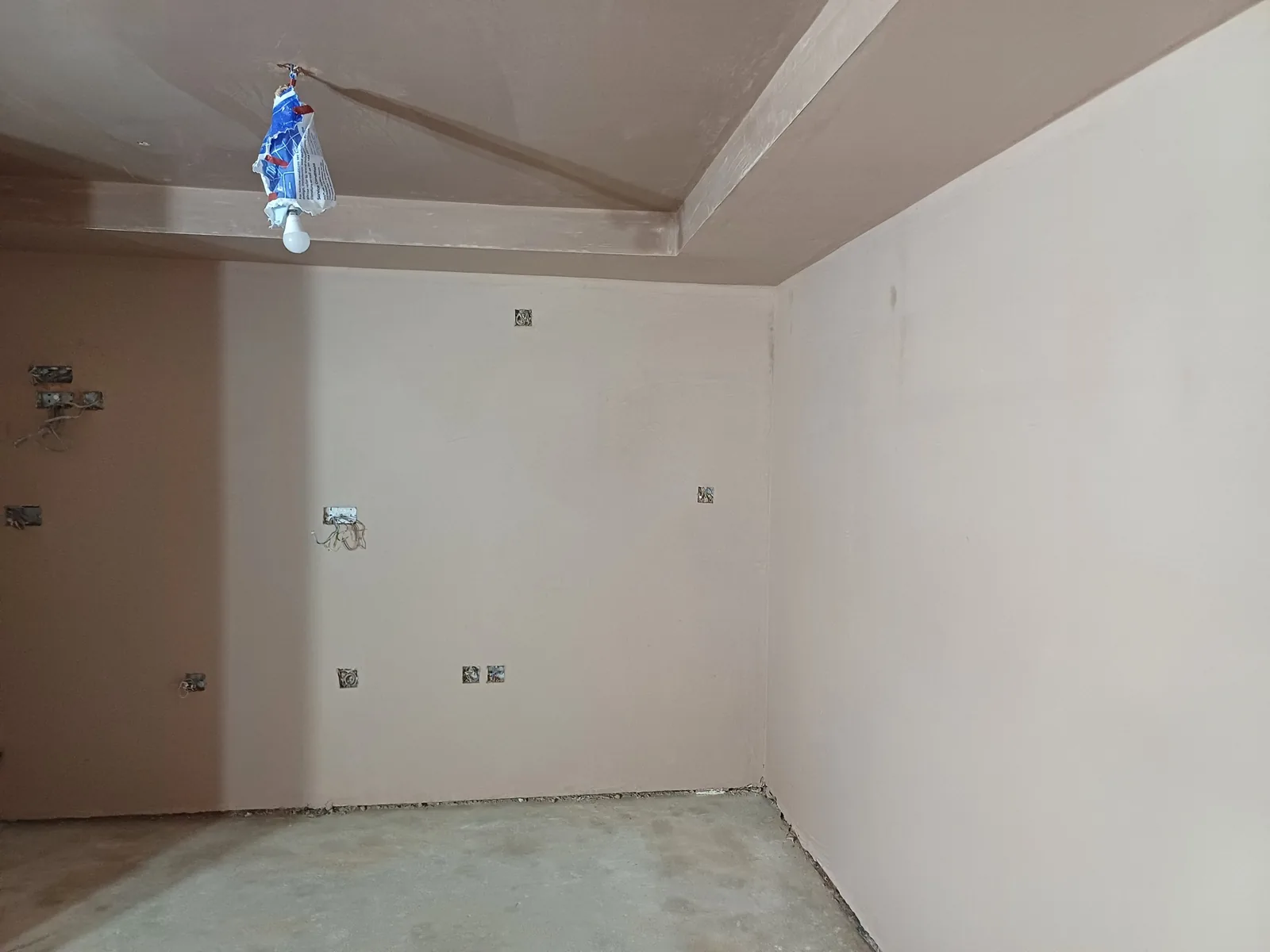
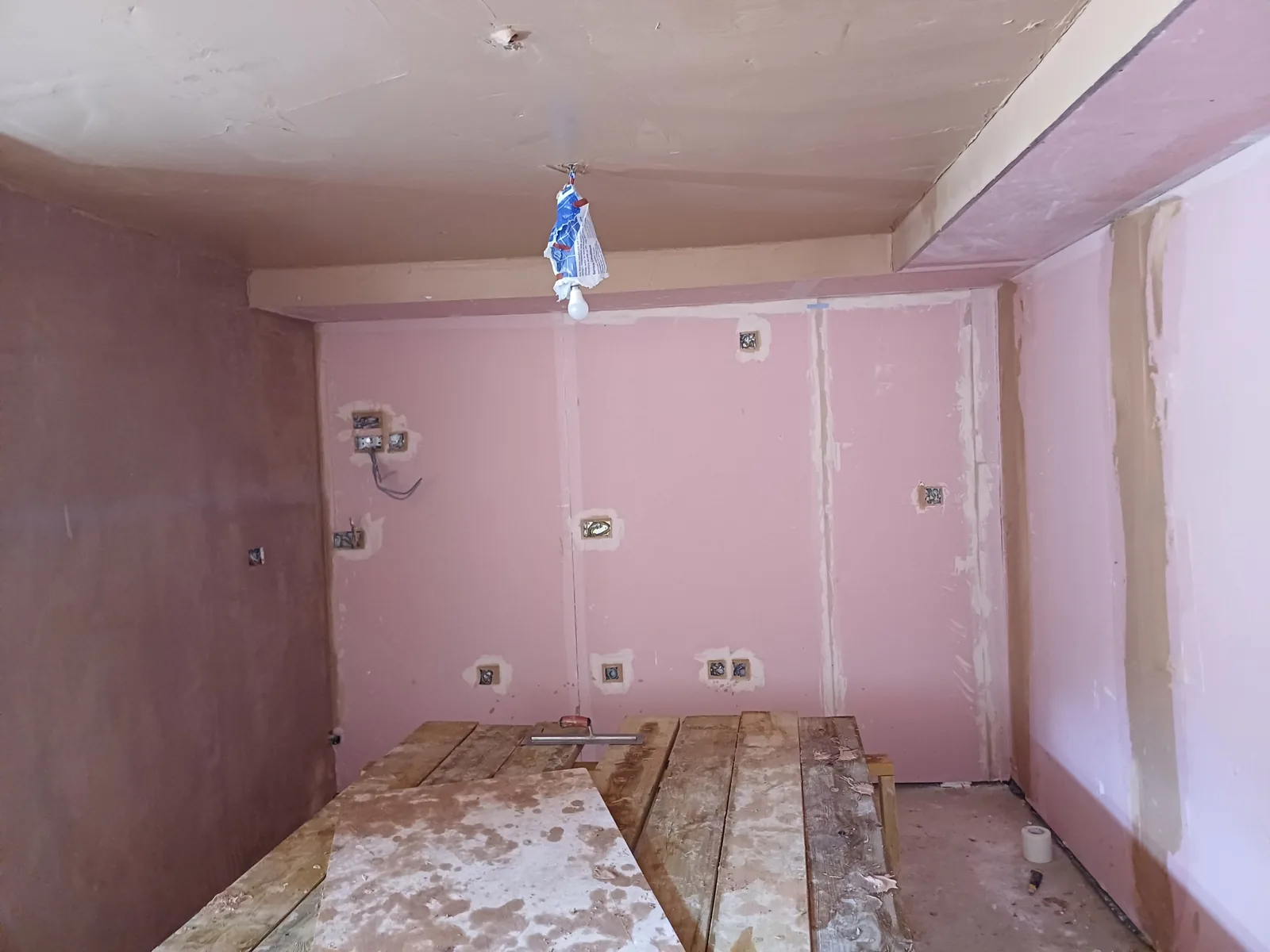
Before the skim coat
New plasterboard needs correctly treated joints, suitable beads at exposed corners and an appropriate plastering system. The exact preparation depends on the boards and the areas being finished.
New plasterboard and fresh skim finishes formed part of a house renovation in Acton. The walls were prepared for decorating, with attention to clean edges, corners and a consistent surface from room to room.
Plasterboarding gives a room a new surface to work with. Once the boards are securely in place, the joints and corners need suitable preparation before a skim coat is applied. The aim is a continuous finish that looks neat in natural light and provides a sound base for decorating.
On this Acton renovation, the work centred on newly boarded areas rather than patching damaged old plaster. That distinction matters: the preparation, materials and finishing process should suit the surface underneath, not follow a one-size-fits-all approach.
Skimming is the finishing stage after plasterboarding. Care at board joints, internal corners and around openings helps the finished wall look even once it has dried and is ready for mist coating and painting.
New plasterboard needs correctly treated joints, suitable beads at exposed corners and an appropriate plastering system. The exact preparation depends on the boards and the areas being finished.
It helps to agree which walls and ceilings are included, where materials can be stored and how floors, doors and adjoining finishes will be protected while work is under way.
Fresh plaster must dry before decorating. Drying time varies with thickness, ventilation and site conditions, so painting should be planned around the condition of the plaster rather than a fixed number of days.
If you are renovating in Acton, let us know which rooms need plasterboarding or skimming, whether ceilings are included and when you hope to decorate. A few details about the space will help us discuss the work and prepare a suitable quote.