
Local repair
Best when the defect is limited to an isolated crack, hole, chase, damaged corner or small loose area.
Explore plaster repairs →When plaster is loose, hollow, crumbling or too damaged to keep, the job is no longer just about the final finish. We assess the existing background, remove or repair what has failed and agree the build-up needed before a new smooth surface is applied.
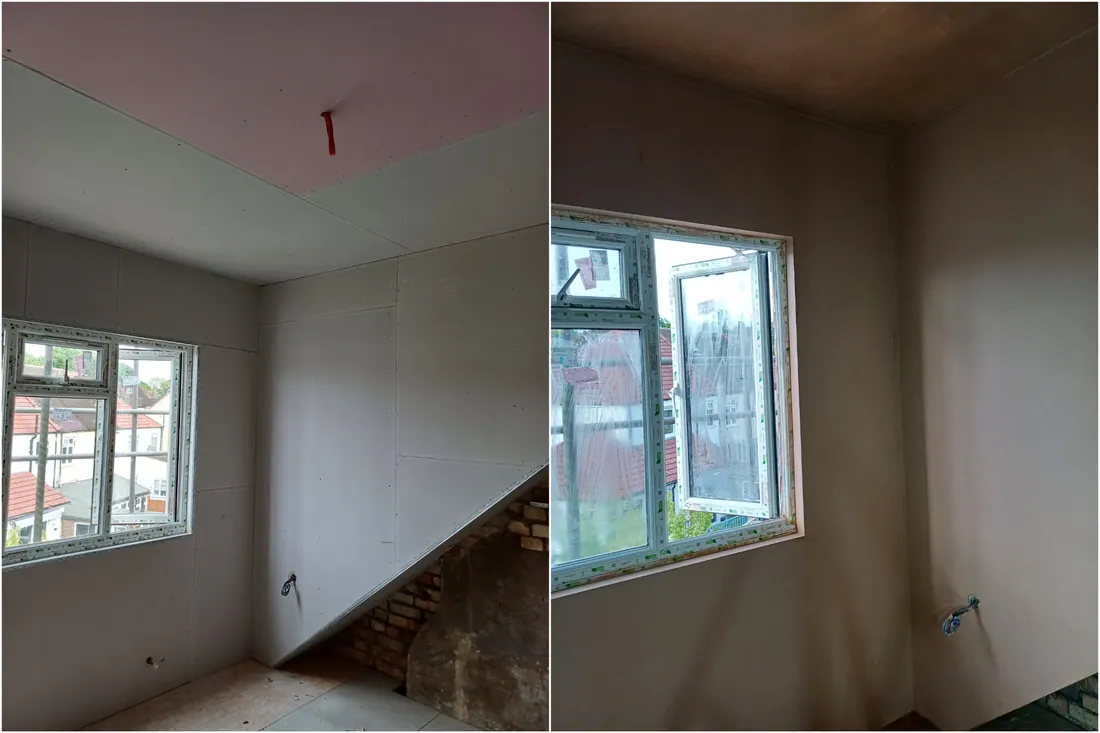
These jobs can look similar after decorating, but they solve different problems. The condition of the existing plaster should decide the scope.
Best when the defect is limited to an isolated crack, hole, chase, damaged corner or small loose area.
Explore plaster repairs →For a stable, reasonably true background where the main problem is the surface finish rather than the plaster beneath it.
Explore skimming →For wider failure, deep damage or an unsuitable background that needs more substantial preparation before finishing.
This page focuses hereUnsure which applies? Use our skim-or-replaster decision guide.
Age alone does not mean a wall should be stripped. Replastering becomes more relevant when the existing material cannot provide a dependable background for the next finish.
Large areas sound hollow, move, bulge or are separating from the masonry/background.
The material powders, breaks away easily or cannot reliably support further finishing work.
Repeated patches, service chases or damaged areas make local repair increasingly impractical.
The problem is more than surface texture and needs a deeper build-up to establish a workable plane.
The exact build-up varies with the wall. A quotation should describe the preparation rather than hiding everything behind the word “replaster”.
Check adhesion, cracks, previous repairs, moisture history, suction, flatness and the underlying construction.
Remove the material that cannot stay, clean the exposed background and deal with defects relevant to the chosen system.
Apply the appropriate repair or undercoat build-up and form the required edges, corners and reveals.
Apply the compatible finishing plaster and leave clear guidance for drying and subsequent decoration.
Brick, blockwork, existing gypsum plaster and previously repaired surfaces can behave differently. Suction, contamination and adhesion all affect what preparation is appropriate. British Gypsum's current plaster-system guidance states that backgrounds should be clean, dry and suitable, and identifies different preparation products for high-suction or difficult backgrounds.
A full strip-out is not automatically better. Keeping stable material can reduce disruption where the remaining background is genuinely suitable.
A smooth new finish does not stabilise plaster that is already separating underneath. Failed areas need to be addressed as part of the preparation.
Some cracks are local finishing defects; recurring, widening or unusual movement deserves investigation before it is simply covered.
Technical reference: British Gypsum — Plaster systems (White Book) ↗
Our current budgeting guide uses £20–£45/m² for replastering. Treat that as an early planning allowance, not a quotation. Removal, disposal, background condition, depth of build-up, access, openings and protection can all change the actual price.
Doors and windows reduce the broad wall area, but reveals, corners and beads add detailed work. Old rooms can also contain several different backgrounds or previous repairs on the same wall.
For that reason, photos and measurements are useful for early discussion, while the final scope should describe the actual preparation required.
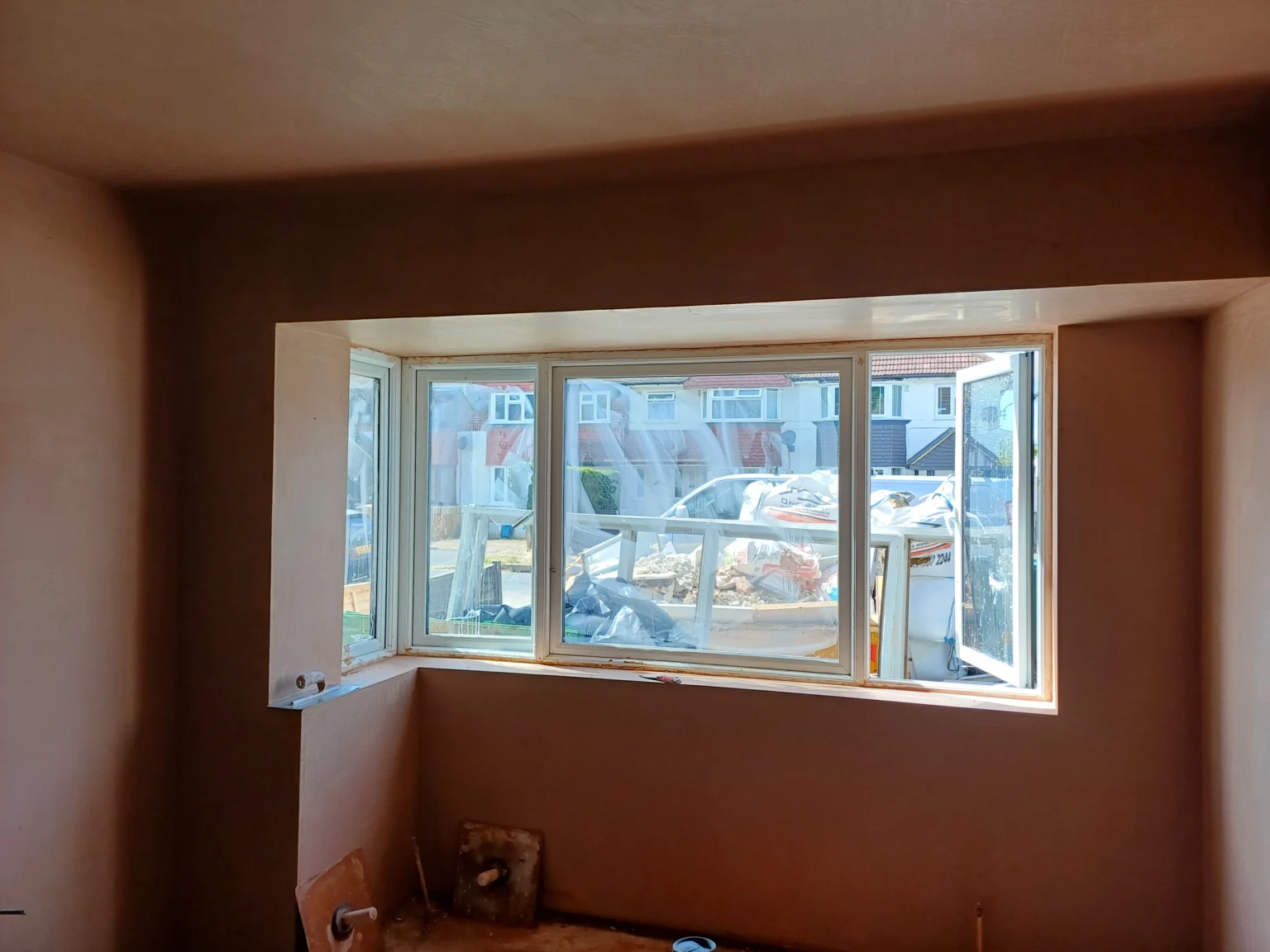
Drying time is affected by the plaster build-up, background, room temperature, humidity and ventilation. Do not use a fixed number of days as proof that every wall is ready for paint; check the surface and follow the appropriate decorating system.
Read our guide to painting new plaster →No. Skimming is a finishing treatment over a suitable stable background. Replastering can involve removing failed material and rebuilding the plaster system before the finish coat.
No. The decision should be based on condition. Sound material may be retained where it is suitable; loose, friable or otherwise unsuitable areas need a different approach.
Only after the moisture source has been understood and dealt with. The appropriate replastering system depends on the cause, background and any salt or moisture history.
It can allow more substantial correction than a thin skim, but the required build-up depends on how far the wall is out and the existing construction. This should be agreed as part of the scope.
Our current London budgeting guide uses £20–£45/m² as an early allowance. The actual quotation depends heavily on stripping, preparation, build-up, access and room details.
When the new plaster has dried sufficiently for the specified decorating system. Drying varies, so appearance and site conditions matter more than relying on one universal waiting period.
Send your postcode, a wide photo of each wall or room, close-ups of loose or damaged areas and approximate dimensions. We can discuss whether the likely scope is a local repair, skim or wider replaster before the quotation is agreed.